Cross-charges
Raised in one company, posted in both.
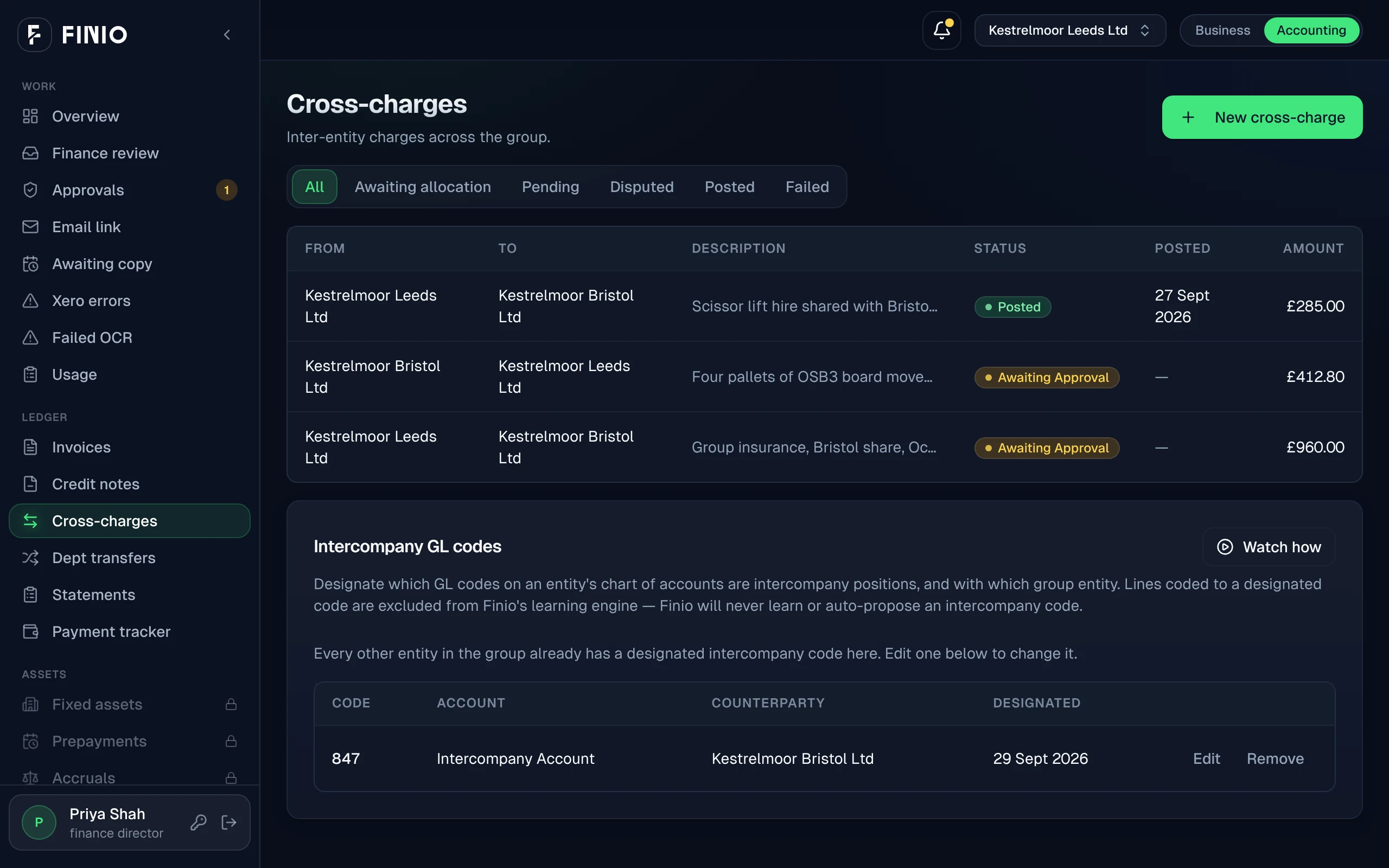
Goods and costs move between the companies in a group all month. Today that surfaces at month-end, when the sending site tells finance and the company being charged finds out last. FINIO raises it as it happens, gets all three sides to agree, and posts both ledgers.
How it runs
At month-end, or the minute the goods move.
Soho sends 4 cases to Shoreditch
Tue 5 Aug, 18:40 · £186.00
Today · at month-end
Up to four weeks after the goods left the building — and the company being charged is the last to know.
Raised the minute it happens
And it takes all three to post
Sending
Soho Ltd
✓ Raised it18:41
Finance
Head office
✓ Approved18:52
Receiving
Shoreditch Ltd
✓ Approved19:06
Posted to Xero, 19:06
Both sides, from the one event
Recharge out
Soho Ltd
+£186.00
Cost in
Shoreditch Ltd
−£186.00
One event, both ledgers — so there is no intercompany left to reconcile.
The same movement into your inventory system, not just the ledgers.
Questions
Asked before the call.
What is a cross-charge between companies?
A charge between two companies in the same group — goods sent from one site to another, or a shared cost — that has to be recorded in both companies' books.
How does FINIO post cross-charges to Xero?
Someone in the sending company raises the charge the moment it happens. Both sites and finance approve it, and FINIO posts the journal into both companies' Xero files automatically — instead of the charge surfacing at month-end.
Can FINIO move costs between departments inside one company?
Yes. Departmental transfers use the same raise-and-approve loop inside one company, moving costs between sites and departments with an approval behind every move.